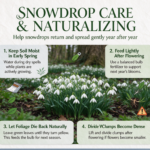

Snowdrop Bulbs — Galanthus Nivalis for Naturalising in Lawns, Woodland Gardens and Early Spring Borders

Price range: $10.60 through $31.81

If you buy now
Earliest arrival December 10
Latest arrival December 20
Estimated delivery time 12 - 22 days

A dependable early-season bulb that naturalises freely and returns year after year, carpeting lawns and woodland edges with nodding flowers as soon as winter loosens.

Subscription successful

You’re now subscribed to price tracking for this product. We’ll notify you if the price drops.

Price tracker

Track this item and get notified if the price drops.

Add to price tracker

60-Day Guarantee - Rest Easy, your plant is protected!

Quick, reliable shipping to any location.

Ready to Grow - This is a healthy starter plant, full of life!

Return this item by mail or in store within 90 days for a full refund.

Quality Plants Grown by Experts. Packaged with Care.

Return this item by mail or in store within 90 days for a full refund.

Description

1. Planting the bulbs

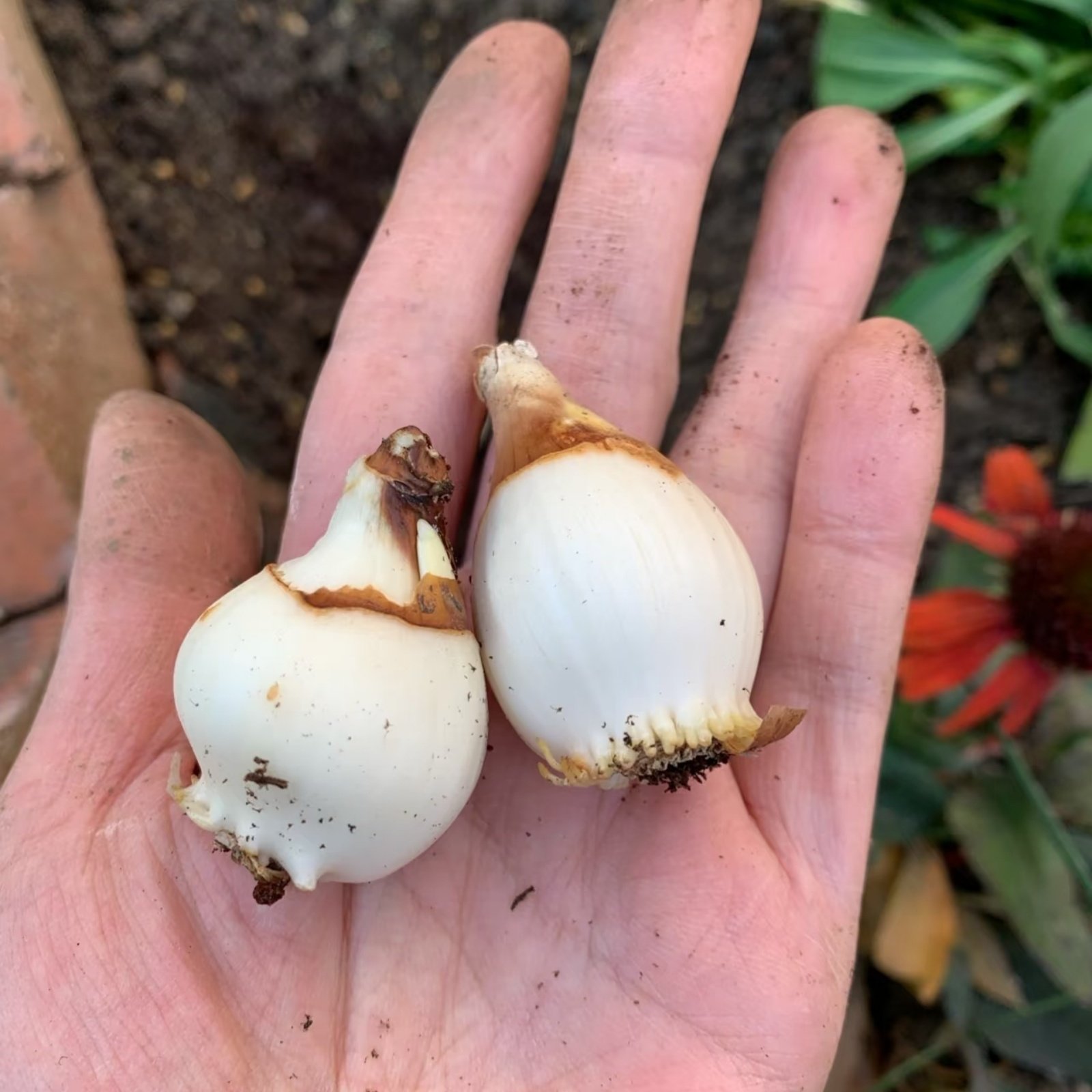
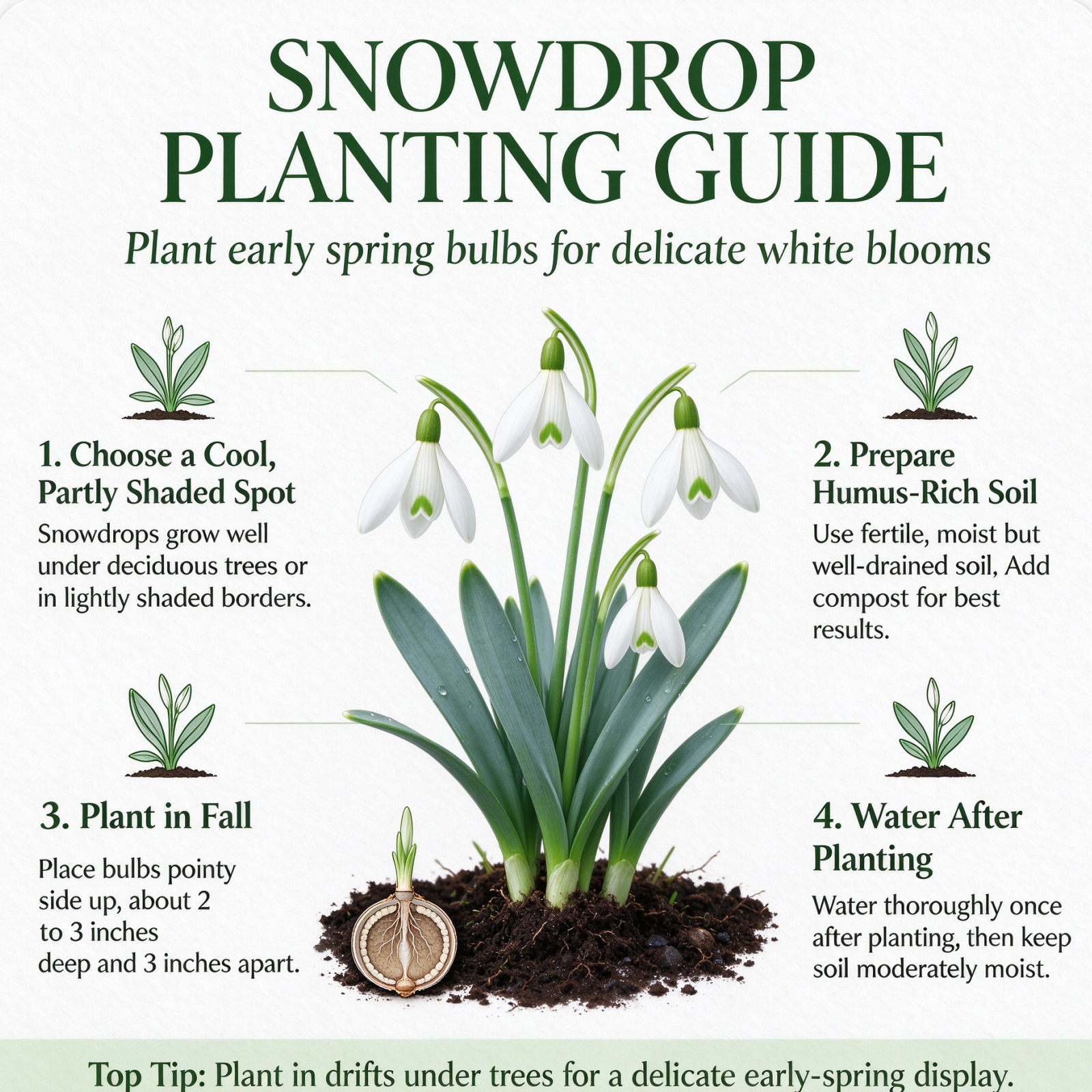
Snowdrop bulbs are small and should be planted in autumn, from September through November, before the ground freezes. choose a spot that stays cool and receives dappled light, and set each bulb about 8 cm deep and 8 cm apart, with the pointed growing tip facing upward. Work a little leaf mould or compost into the soil first so it stays fertile yet drains freely. Plant in small groups or scattered drifts rather than straight rows, and water once thoroughly after planting to settle the soil around the roots.

2. Light, water and feeding

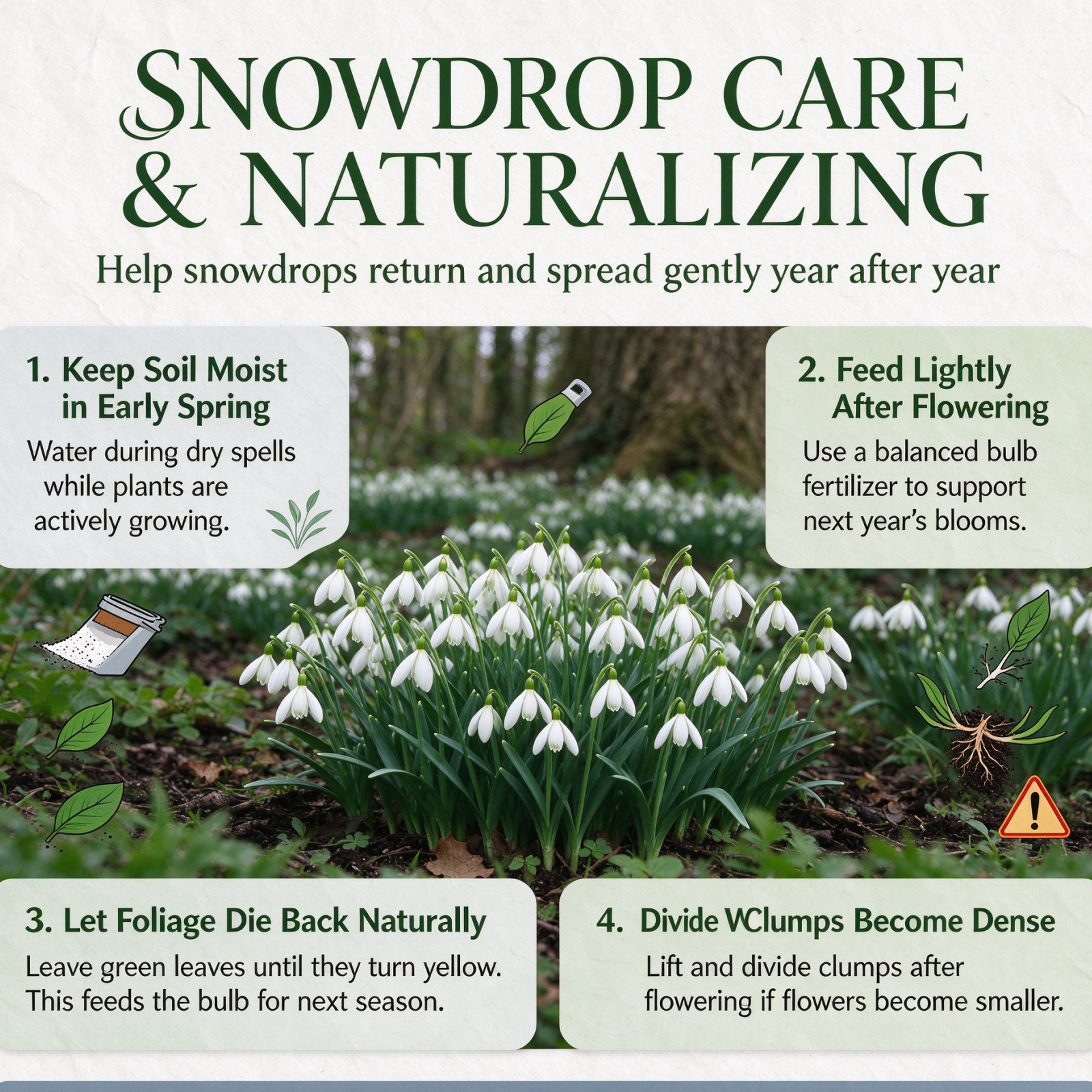
Snowdrops naturally flower under deciduous trees, so they prefer shade in summer and some winter sun. A position with morning light and protection from hot afternoon sun suits them best. Keep the soil evenly moist during active growth in late winter and early spring, but never waterlogged, since the bulbs will rot in standing water. A light mulch of leaf mould each autumn usually provides all the feeding they need; where soil is poor, a balanced slow-release fertiliser in early spring supports stronger growth.

3. Flowers and how they develop

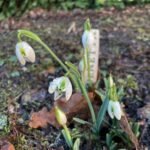
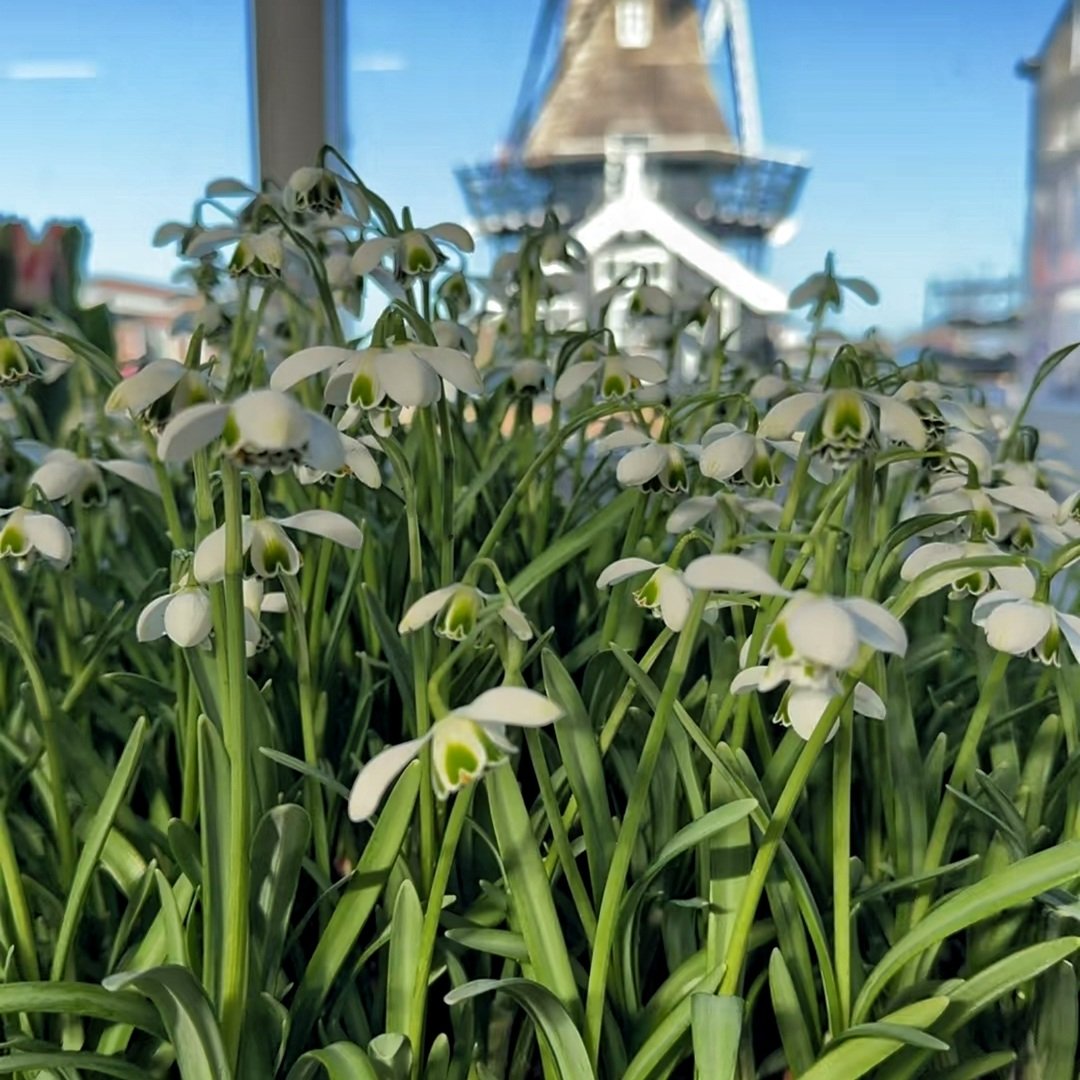
Each bulb sends up a pair of narrow strap-like leaves and one or two slender stalks, each carrying a single nodding flower. The bloom has three outer petals forming a rounded bell and three shorter inner segments marked with a distinctive green pattern, creating the characteristic snowdrop silhouette. Flowers open in sequence from late winter into early spring, often pushing through frost or even a light covering of snow, and each bloom lasts for several days before fading.

4. Life after flowering and dormancy

Once flowering finishes, the leaves continue to photosynthesise for several weeks and should be left to yellow and die back naturally, as this is when the bulb rebuilds its energy for the following year. Avoid mowing or cutting the foliage early. Snowdrops multiply by producing small offsets around the parent bulb, and established clumps can be lifted and divided in early spring just after flowering, while the leaves are still present, to make new plantings.

5. Garden uses and safety

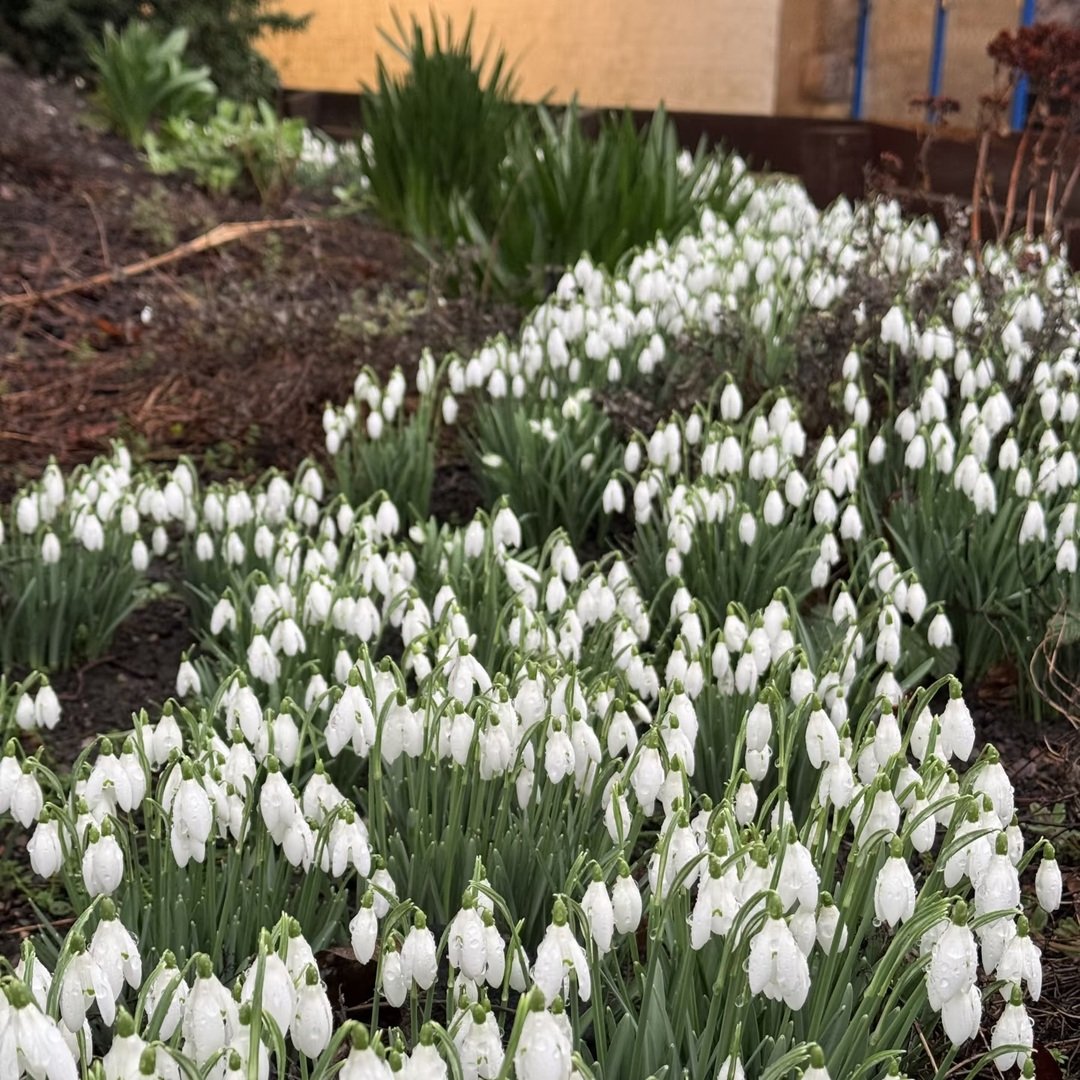
Snowdrops are ideal for naturalising in lawns, beneath deciduous trees, along shady paths, in rock gardens and in containers, and the flowers are excellent for small spring posies. Deadhead faded blooms if seed is not wanted, though self-seeding is often welcome. As with all members of the amaryllis family, the bulbs are poisonous if eaten and the sap may irritate sensitive skin, so wear gloves when handling and keep them away from children and pets.

Additional information
Number of Products1Bulbs, 2Bulbs, 3Bulbs, 4Bulbs, 5Bulbs

Reviews

Customer Reviews

0.00 out of 5
Based on 0 reviews
0
0
0
0
0
There are no reviews yet.
Purchased customers only

Only customers who purchased this product can leave a review. Please log in with the purchase account, or ask a product question below.

Ask a question

Questions & Answers

No questions yet.

Hot Deals

Recently Viewed

Subtitle text example

Title text example

标题后的文本示例