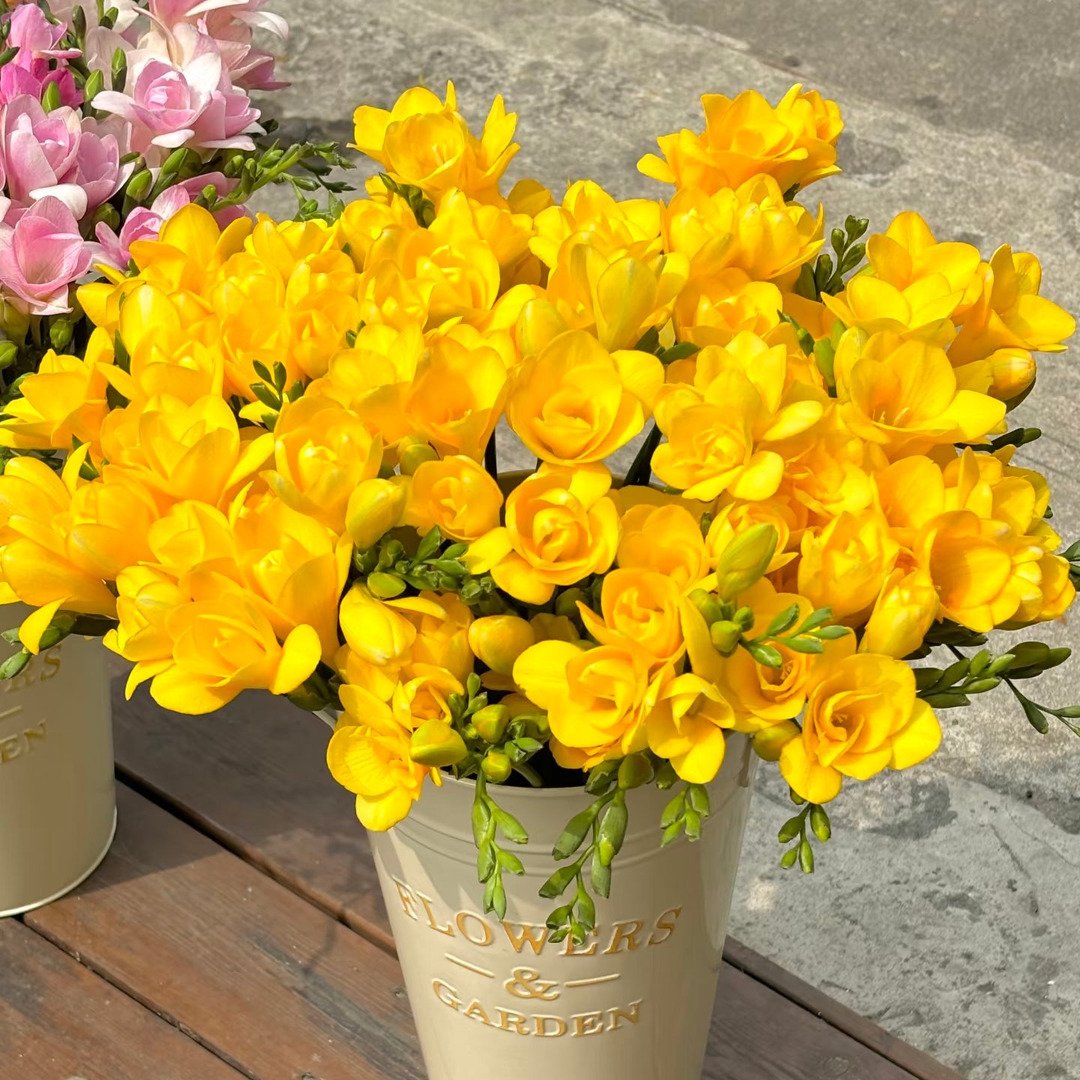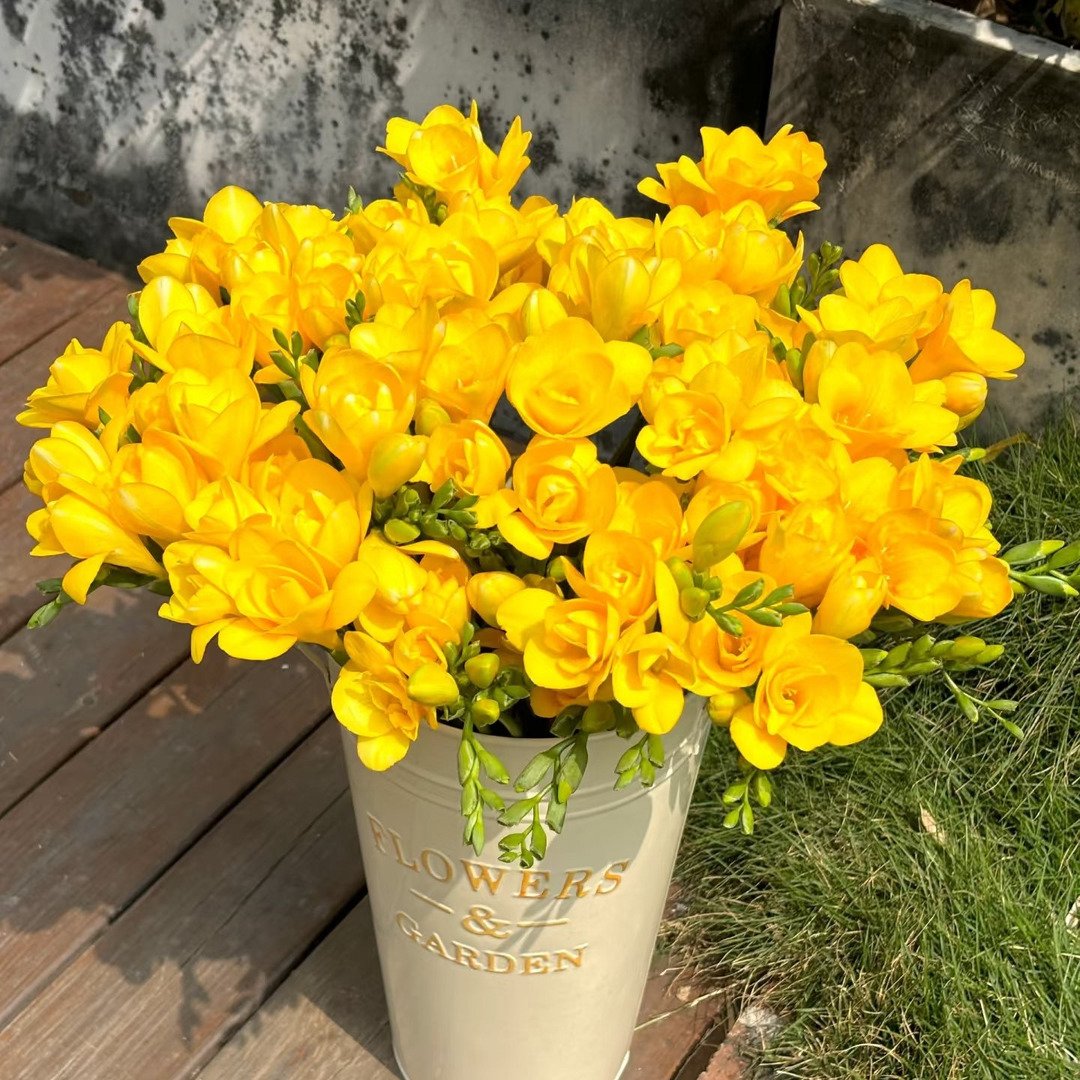

Golden Yellow Double Freesia Corms — Intensely Fragrant Ruffled Blooms, Autumn Planting Bulbs for Sunny Pots and Cut Flowers
$10.88 – $32.64Price range: $10.88 through $32.64
Dormant freesia corms that send up one-sided spikes of long-lasting, sweetly scented flowers. Plant in autumn, 2.5-5 cm deep in sharply drained soil, and give cool nights early on for reliable budding.
You’re now subscribed to price tracking for this product. We’ll notify you if the price drops.
60-Day Guarantee - Rest Easy, your plant is protected!
Quick, reliable shipping to any location.
Ready to Grow - This is a healthy starter plant, full of life!
Return this item by mail or in store within 90 days for a full refund.
Quality Plants Grown by Experts. Packaged with Care.
Return this item by mail or in store within 90 days for a full refund.
1. What arrives in the parcel
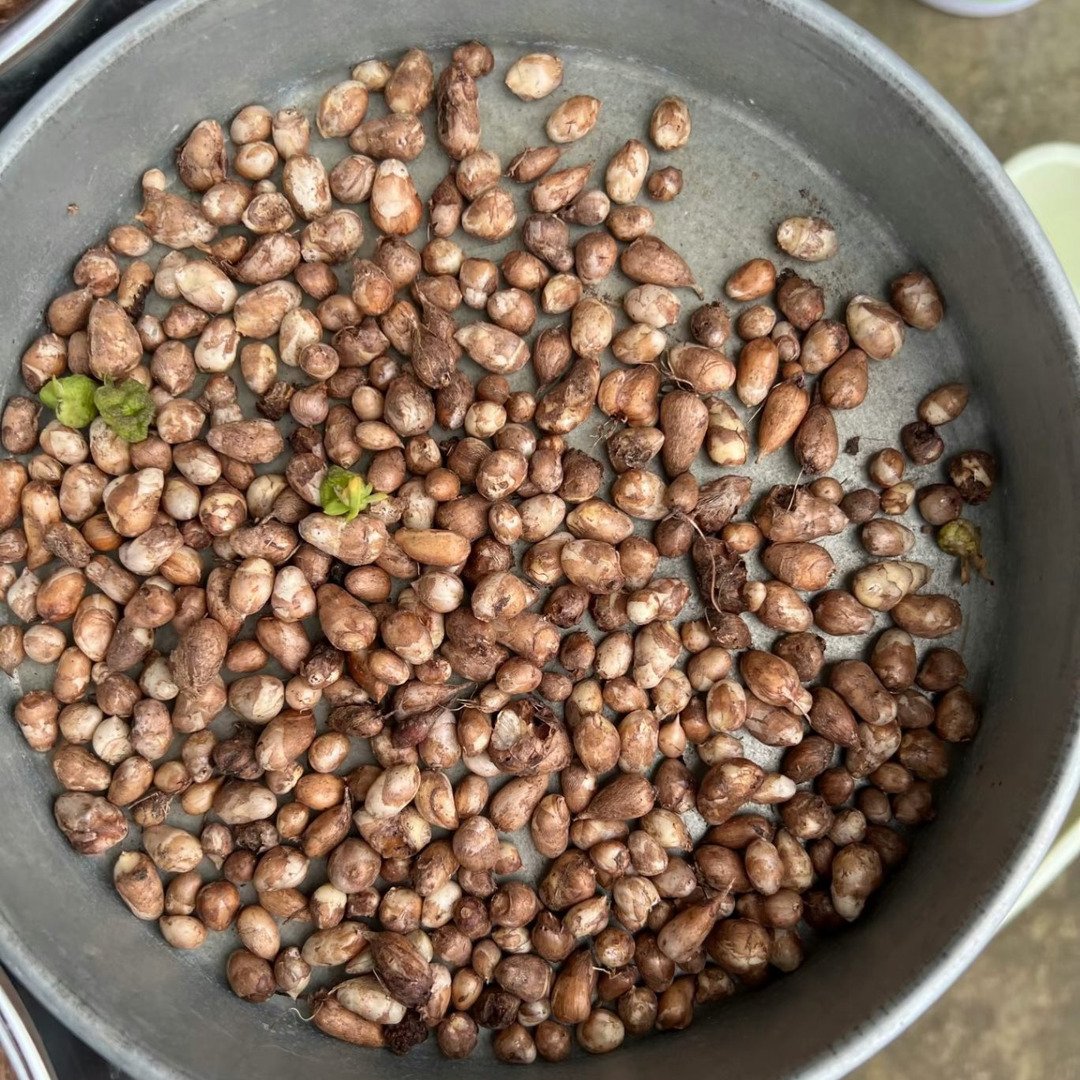
You are buying dormant freesia corms, not seeds and not true bulbs. A corm is a compressed, rounded stem base wrapped in a dry papery tunic, with a small pointed growing tip on top and a flat basal plate underneath where the roots will emerge. Stock travels dry and dormant, so unpack it on arrival, discard the packing and keep it in a paper bag in a cool, airy, shaded place until planting. Do not soak, peel, wash, refrigerate or pot it up in a heated room in advance, and do not leave it in sealed plastic where condensation can build up. Firm, heavy corms with clean dry tissue are sound; anything soft, sour-smelling, mouldy or hollow should be thrown away rather than planted with healthy stock. A few days in paper is harmless, but weeks on a warm shelf will exhaust the stored reserves the plant needs to flower.
2. When and how to plant
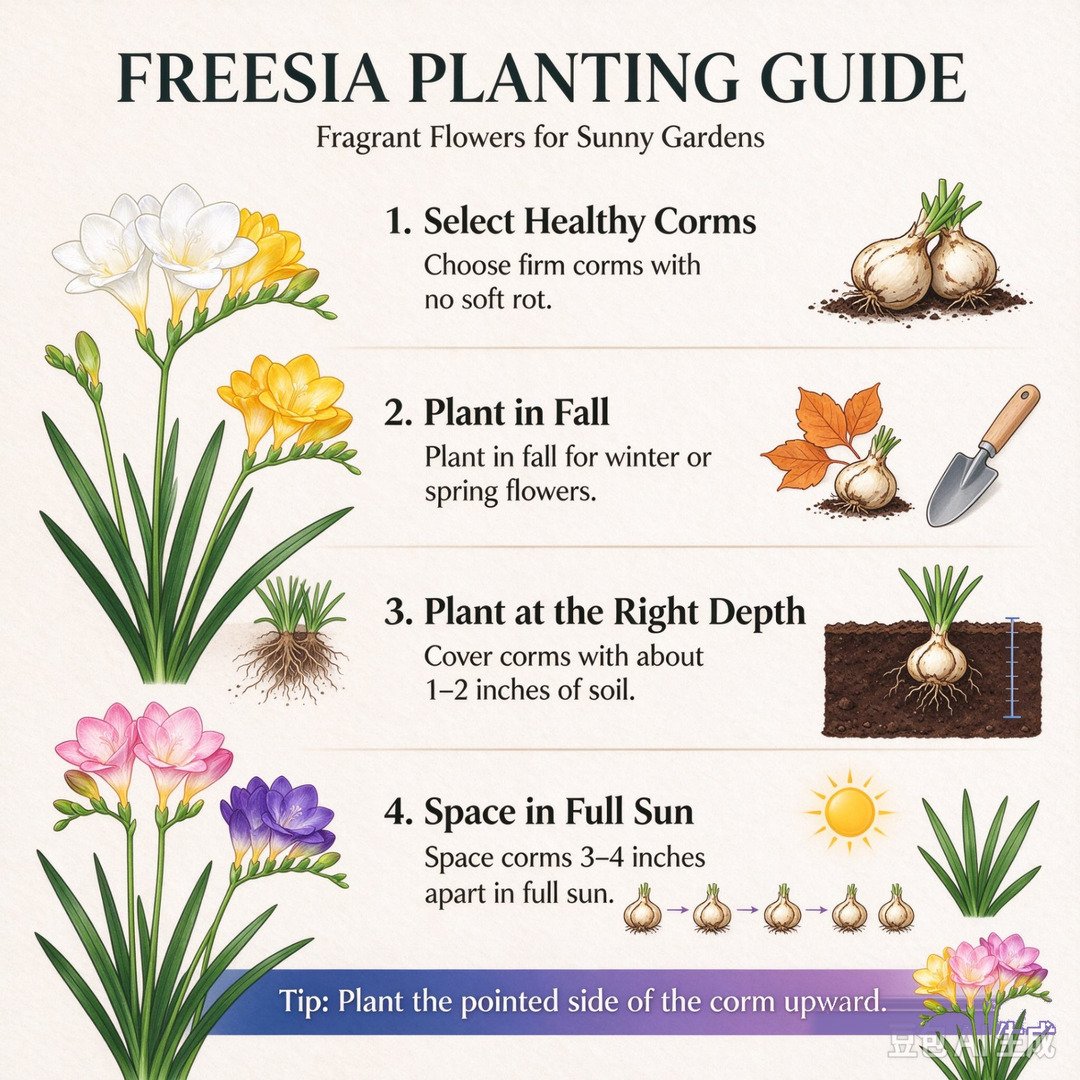
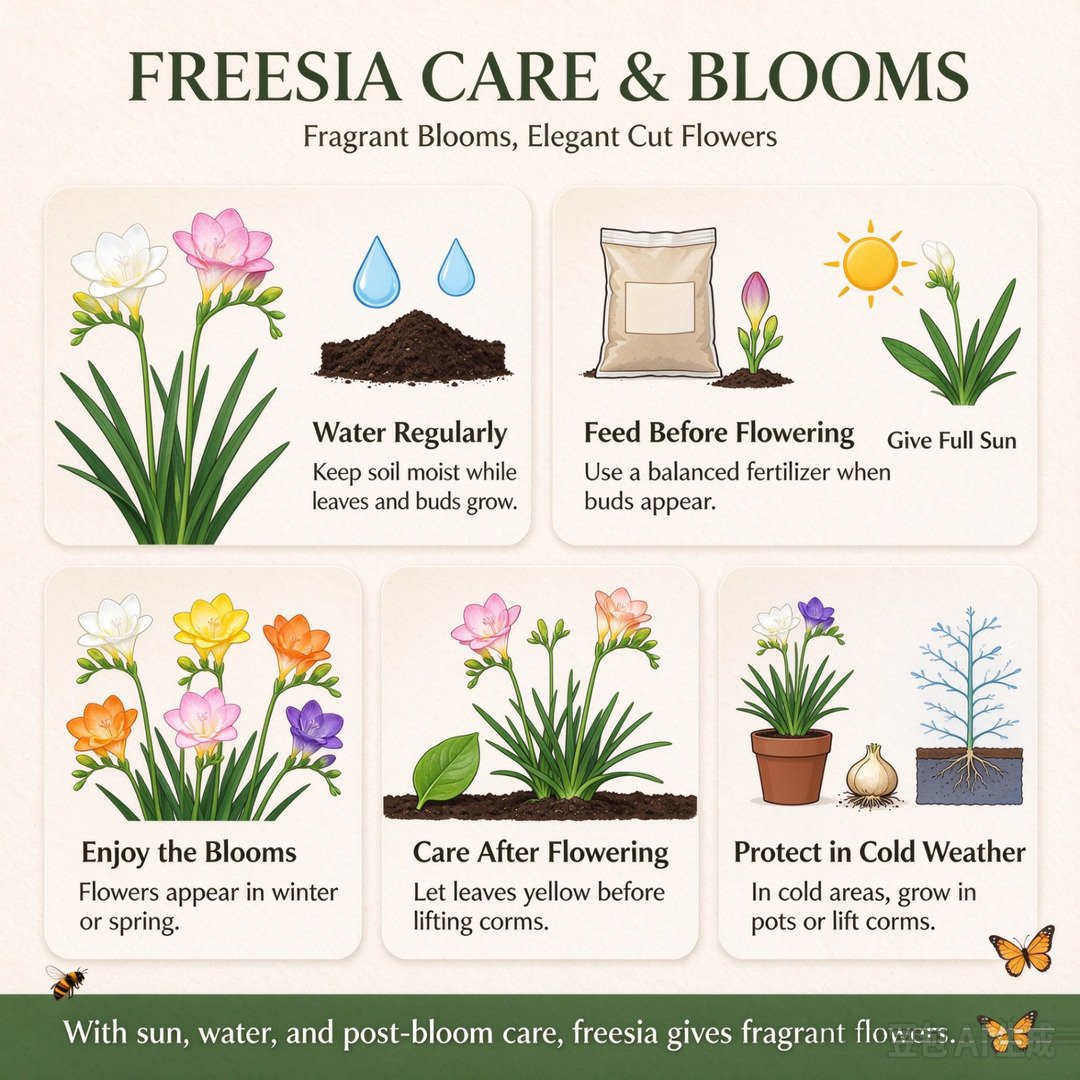
Plant in autumn, roughly six weeks before the first hard frost, or in late winter in mild, frost-free climates. Choose full sun and a loose, sharply drained sandy loam; heavy wet clay, compacted ground and low spots where winter water sits are the most common cause of corm rot. Set each corm with the pointed tip upward under about 2.5-5 cm of soil (roughly twice its own height), spacing them 7-10 cm apart, then water once thoroughly to settle the mix and keep it only lightly moist until shoots appear. Containers need a deep pot with generous drainage holes and a gritty, free-draining compost, never a saucer of standing water. Cool night temperatures around 10-15 C during the first weeks of growth are what trigger flower initiation, so a warm living room in winter usually produces plenty of leaves and no blooms. Once growth is active, water regularly but let the surface dry slightly between waterings, and feed lightly rather than heavily.
3. How the flower spikes open
Each corm sends up a slender, slightly arching stem carrying a one-sided row of buds along its upper half. The lowest flower opens first and the rest follow upward in sequence over the following days, so a single spike stays colourful for two to three weeks instead of opening all at once. Cool weather lengthens the display considerably, while a sudden hot spell compresses it into a few days. Because the buds continue to open after cutting, a stem picked with only one or two open flowers still gives a full show indoors. An established clump produces several successive spikes, which is why a small group of corms reads as a much larger planting by mid-season.
4. After the flowers fade
Cut or snap off each spent flower stem as the last blooms fade, but leave every leaf standing. The narrow foliage keeps photosynthesising for six to eight weeks and rebuilds the corm for next year, so cutting it back early is the quickest way to lose the following season’s display. When the leaves yellow and collapse naturally, stop watering altogether and let the soil dry out. In areas with frost or wet winters, lift the corms, brush off the soil, cure them somewhere warm and airy for a week, then store them dry at roughly 5-9 C until the next planting season; in warm, dry climates they can be left in the ground if irrigation is withheld through summer. Small offset corms form around the mother corm and can be separated while dormant, though they need one or two more seasons to reach flowering size. Rotate planting ground every few years and discard any corm showing basal rot, since fusarium wilt persists in old soil. Dormant corms need no water and no fertiliser at all.
5. Where to use it in the garden
Plant in drifts of at least a dozen corms rather than single specimens, and set them towards the front of a sunny border where the scent can be appreciated at close range. They combine well with other spring bulbs and with low, drought-tolerant perennials that enjoy the same free-draining soil; avoid thirsty bedding plants that need daily irrigation through the summer, because the dormant corms resent that water. A sheltered south-facing bed, a gravel garden or the base of a warm wall all suit them. Mark the planting spot while the foliage is dying back, since the leaves disappear completely and are easily dug up by mistake. In the right site, clumps will slowly thicken from self-produced offsets year after year.
| Number of Products | 10Bulbs, 15Bulbs, 3Bulbs, 5Bulbs, 8Bulbs |
|---|
Reviews
Customer Reviews
Only customers who purchased this product can leave a review. Please log in with the purchase account, or ask a product question below.
Ask a question
Questions & Answers
Hot Deals
Waxed Amaryllis Christmas Gift Set — Santa Face Decoration with Mini Hat & Hanging Ornament, Zero-Care Holiday Blooms, 34cm Bulb Circumference
Waxed Amaryllis Christmas Gift Set — Snowman Face with Mini Knit Hat & Scarf, Zero-Care Holiday Blooms, 34cm Bulb Circumference
Waxed Amaryllis Christmas Gift Set — Bulb with Reindeer Ornament & Mini Knit Hat, Zero-Care Holiday Blooms, 34cm Bulb Circumference
Waxed Amaryllis Christmas Gift Set — Bulb with Snowflake Ornament & Mini Knit Hat, Zero-Care Holiday Blooms, 34cm Bulb Circumference
Waxed Amaryllis Christmas Gift Set — Bulb Dressed in a Mini Knit Hat & Striped Scarf, Zero-Care Holiday Blooms, 34cm Bulb Circumference
Recently Viewed
Title text example
标题后的文本示例