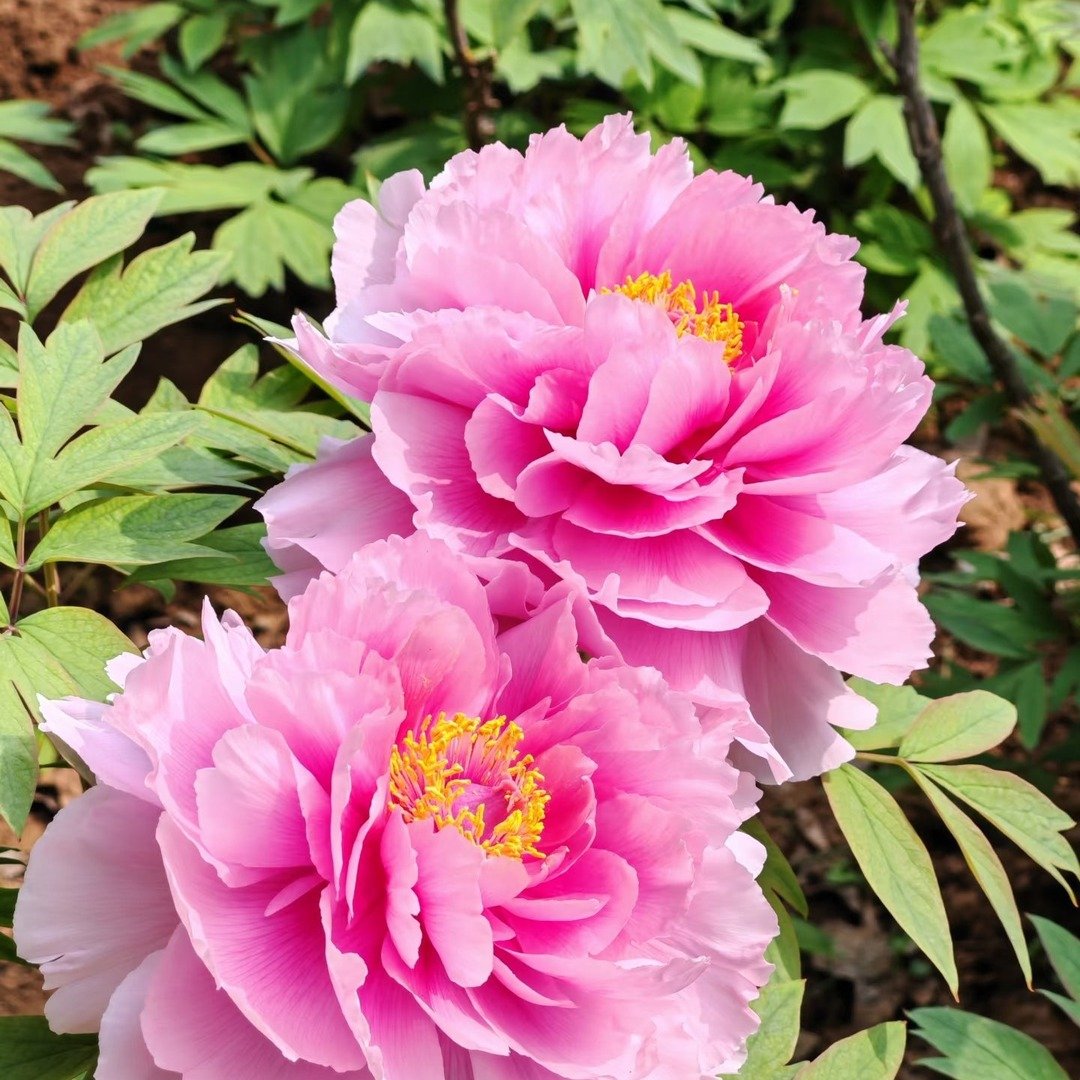
Blush Pink Peony Tuberous Roots — Layered Fragrant Double Blooms, Long-Lived Hardy Roots for Cottage Gardens and Paths

Price range: $13.10 through $39.29

If you buy now
Earliest arrival December 9
Latest arrival December 19
Estimated delivery time 12 - 22 days

Long-lived peony roots producing many-petalled, lightly scented blooms on a permanent woody framework. Plant shallow in autumn in sun and well-drained soil, water at the base, and remove spent blooms while keeping all foliage.

Subscription successful

You’re now subscribed to price tracking for this product. We’ll notify you if the price drops.

Price tracker

Track this item and get notified if the price drops.

Add to price tracker

60-Day Guarantee - Rest Easy, your plant is protected!

Quick, reliable shipping to any location.

Ready to Grow - This is a healthy starter plant, full of life!

Return this item by mail or in store within 90 days for a full refund.

Quality Plants Grown by Experts. Packaged with Care.

Return this item by mail or in store within 90 days for a full refund.

Description

1. What arrives in the parcel

You are buying dormant peony tuberous roots, not bulbs. Each piece is a short woody crown with a cluster of thick, fleshy storage roots and one or more plump growth buds at the top; the buds may already be showing a little colour, which is normal. Stock travels dry and bare-rooted because that is its resting state, so do not soak, peel, wash, pot up in a warm room or refrigerate it before planting. Unpack immediately, discard the packing and keep the roots in a paper bag in a cool, airy, shaded place for the short time before planting. A sound crown is firm and heavy with clean, dry tissue; anything soft, mouldy, sour-smelling or hollow should be discarded rather than planted alongside healthy stock. Do not let the roots dry out for weeks on end – a few days in paper is fine, a month on a shelf is not.

2. When and how to plant

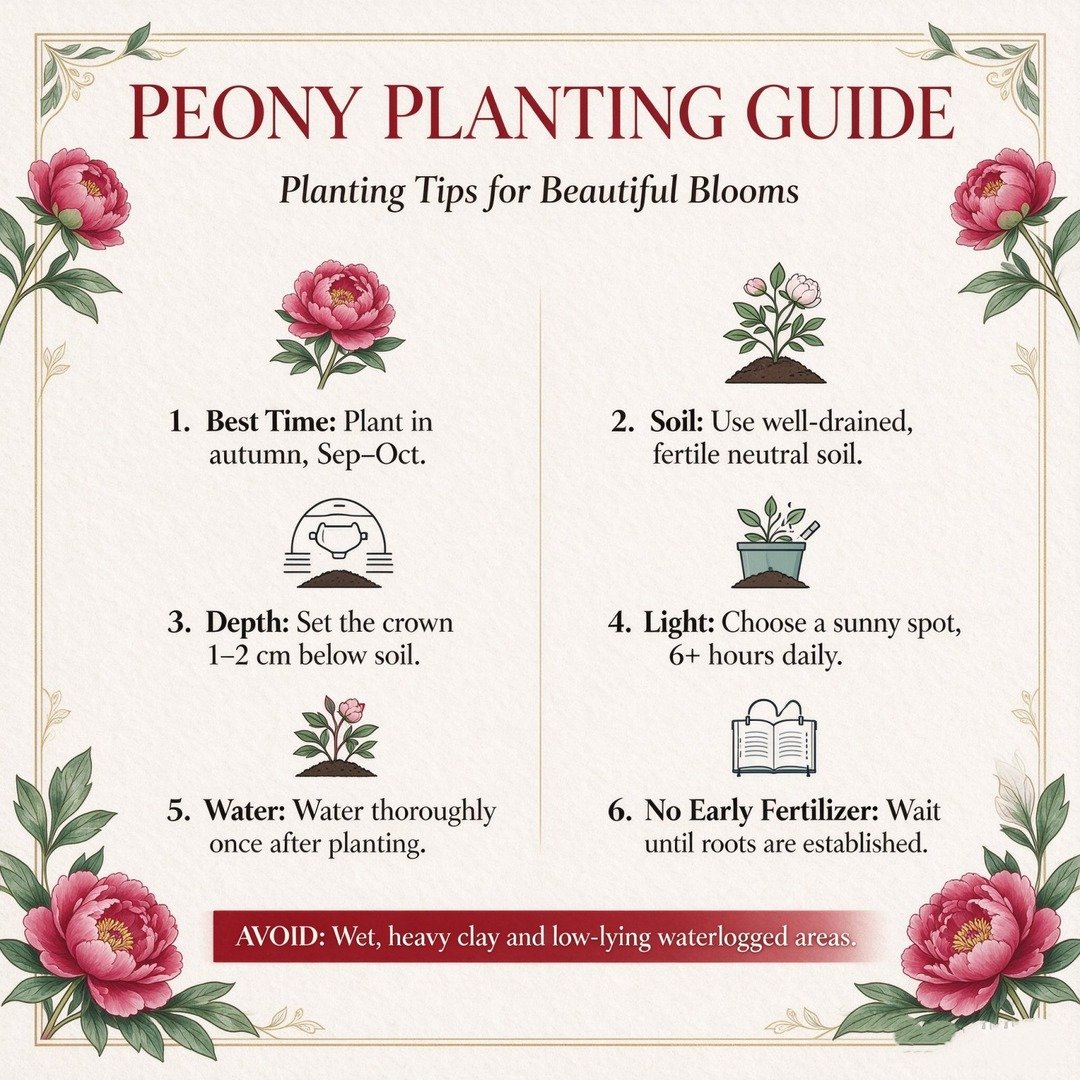
Autumn, roughly September to October, is by far the best planting window: the soil is still warm enough for root growth but the top of the plant is dormant, so it establishes before the ground freezes. Choose a position with at least six hours of sun, ideally with light afternoon shade in hot climates, and fertile, well-drained neutral soil. Avoid wet heavy clay, compacted ground and low-lying spots where water sits in winter – root rot from overwatering and poor drainage is the single most common cause of loss. Set the crown just below the soil surface, about 2-3 cm of soil over the top of the woody crown; planting too deep is a classic reason a peony makes leaves but no flowers. Allow 90-120 cm between plants, because a mature specimen is a long-lived woody shrub, not a small perennial. Water thoroughly once after planting to settle the soil, then let the surface dry slightly between waterings. Do not apply fertiliser at planting time: wait until the roots are established and new growth is clearly underway.

3. Flower form, scent and pollinators

The blooms are built from many overlapping layers of broad, crinkled petals around a central boss of stamens, opening from a rounded bud that swells visibly for several days before unfurling. Many selections carry a light, sweet fragrance that is strongest in the still air of a warm morning and fades by midday, which is why a planting near a path or seat is more rewarding than one at the back of a border. Bees and other early-season pollinators work the open flowers actively on sunny days. Because the fully double heads are large and heavy, a stem can bow after prolonged rain; choose a site sheltered from strong wind and avoid overhead watering while the buds are opening. A cool spring gives the firmest petals and the longest-lasting flowers.

4. After the flowers fade

Snap or cut off each spent bloom just below the flower so the plant does not spend energy ripening seed pods, but leave every leaf in place. The foliage keeps working until the first hard frost and builds the buds for next spring, so cutting it back early costs you the following year’s display. Once the leaves yellow and fall naturally, clear them away rather than composting diseased material. A light autumn dressing of balanced or phosphorus-rich fertiliser supports flower formation; keep high-nitrogen feed away, since it produces soft leaves at the expense of blooms and encourages fungal leaf spots. In early spring, prune only weak, dead or damaged wood. Unlike herbaceous peonies, the woody above-ground stems of a tree peony persist through winter and must never be cut to the ground. Through dormancy the plant needs no watering, and young specimens appreciate a loose winter mulch over the root zone in areas of severe frost. Do not move an established plant: it resents disturbance and improves with age.

5. Watering, feeding and problem prevention

Once established the plant is reasonably drought tolerant, but it performs best with deep, occasional watering during dry spring growth rather than frequent shallow sprinkling. Let the soil dry slightly between waterings and always water at the base, early in the day, so foliage dries before nightfall. Watch for two recurring problems named on most care guides: root rot from overwatering and fungal leaf spots from poor air circulation. Remove and bin spotted foliage in autumn, keep mulch off the crown, sterilise pruning tools between plants and never use a high-nitrogen lawn feed nearby. A low-nitrogen, phosphorus-rich dressing after flowering is enough. These measures prevent nearly all losses; chemical intervention is rarely needed on a well-sited plant.

Additional information
Number of Products1roots, 2roots, 3roots, 4roots, 5roots

Reviews

Customer Reviews

0.00 out of 5
Based on 0 reviews
0
0
0
0
0
There are no reviews yet.
Purchased customers only

Only customers who purchased this product can leave a review. Please log in with the purchase account, or ask a product question below.

Ask a question

Questions & Answers

No questions yet.

Hot Deals

Recently Viewed

Subtitle text example

Title text example

标题后的文本示例