
Anemone Bulbs — Poppy-Like Single Flowers with Dark Centres for Spring Borders, Pots and Cut Arrangements, Easy-to-Grow Corms

Price range: $11.70 through $35.11

If you buy now
Earliest arrival December 10
Latest arrival December 20
Estimated delivery time 12 - 22 days

Easy spring-flowering corms producing poppy-like single blooms above finely divided foliage. Soak before planting, then enjoy sturdy stems for borders, pots and cutting.

Subscription successful

You’re now subscribed to price tracking for this product. We’ll notify you if the price drops.

Price tracker

Track this item and get notified if the price drops.

Add to price tracker

60-Day Guarantee - Rest Easy, your plant is protected!

Quick, reliable shipping to any location.

Ready to Grow - This is a healthy starter plant, full of life!

Return this item by mail or in store within 90 days for a full refund.

Quality Plants Grown by Experts. Packaged with Care.

Return this item by mail or in store within 90 days for a full refund.

Description

1. Soaking and planting the corms

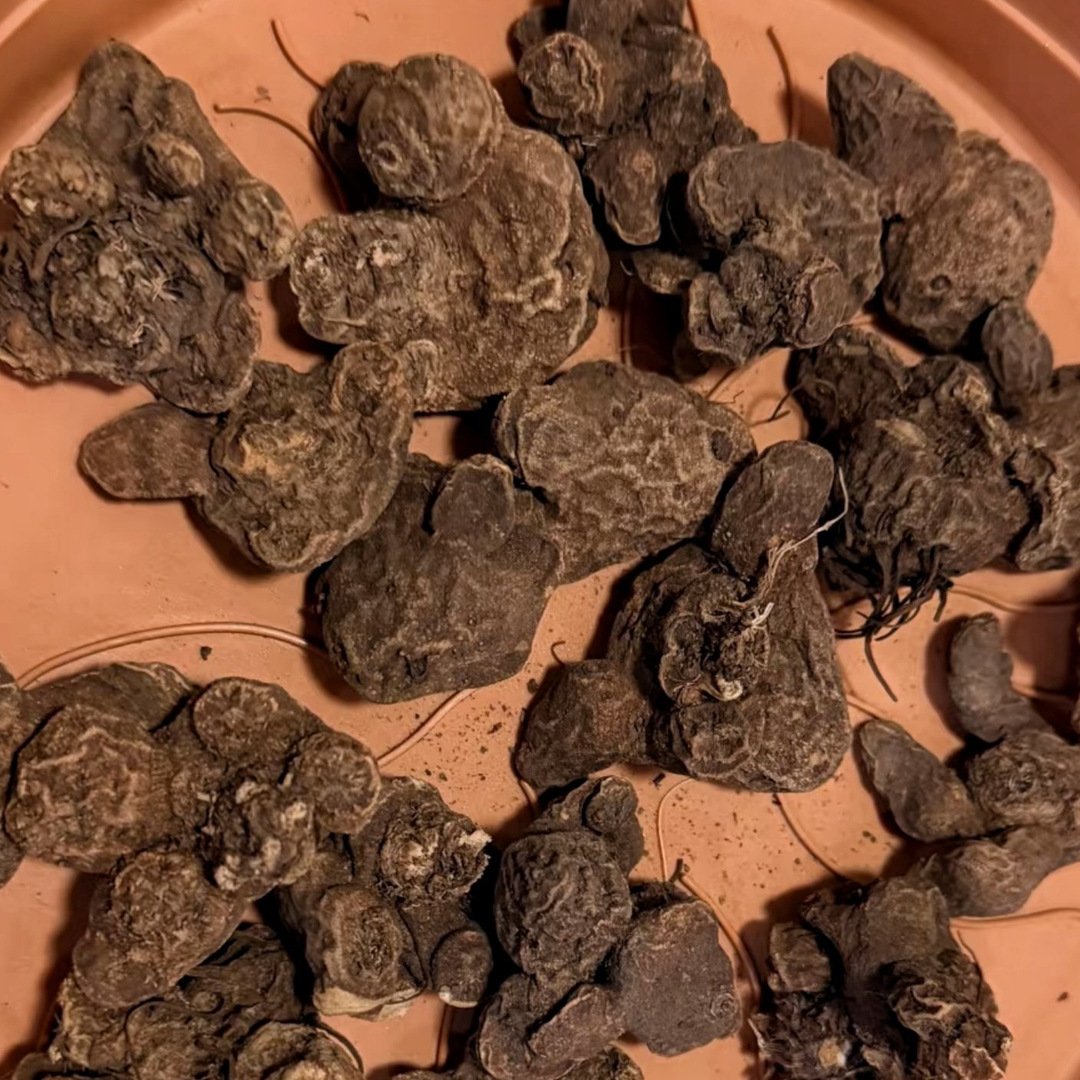
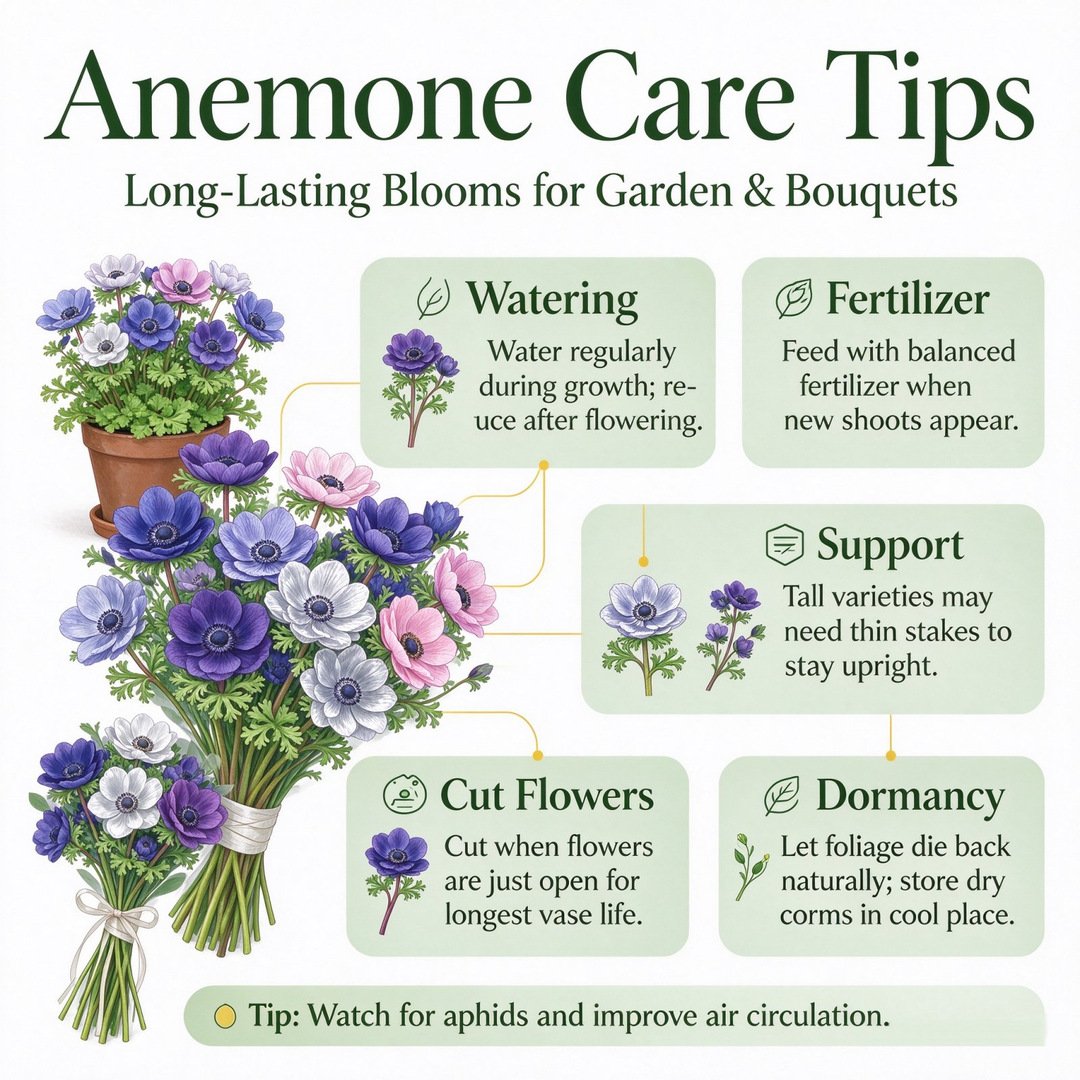
Anemone coronaria grows from a small, wrinkled, irregular corm rather than a rounded bulb, and the dry corm should be rehydrated before it goes into the ground. Soak it in room-temperature water for eight to twelve hours, then plant about 2-5 cm deep with the pointed, scarred side upwards; if you cannot tell which end is which, laying the corm on its side still works. In mild winter regions plant in autumn for early spring flowers, while in cold areas plant as soon as the soil can be worked in late winter or early spring. Space corms 10-15 cm apart in loose, fertile, free-draining soil, and never let them sit in waterlogged ground.

2. Light, watering and feeding through growth

A position in full sun to light partial shade gives the straightest stems and the most flowers; in hotter climates a little afternoon shade keeps the bloom period going longer. Water regularly but lightly so the soil stays evenly moist rather than saturated, and always let the top layer begin to dry between waterings. Once new shoots appear, feed every two to three weeks with a balanced, half-strength liquid fertiliser, stopping as soon as buds show. Good air movement between plants is the simplest way to avoid powdery mildew and aphids, so resist overcrowding and water at soil level instead of over the foliage.

3. Flower form and what follows

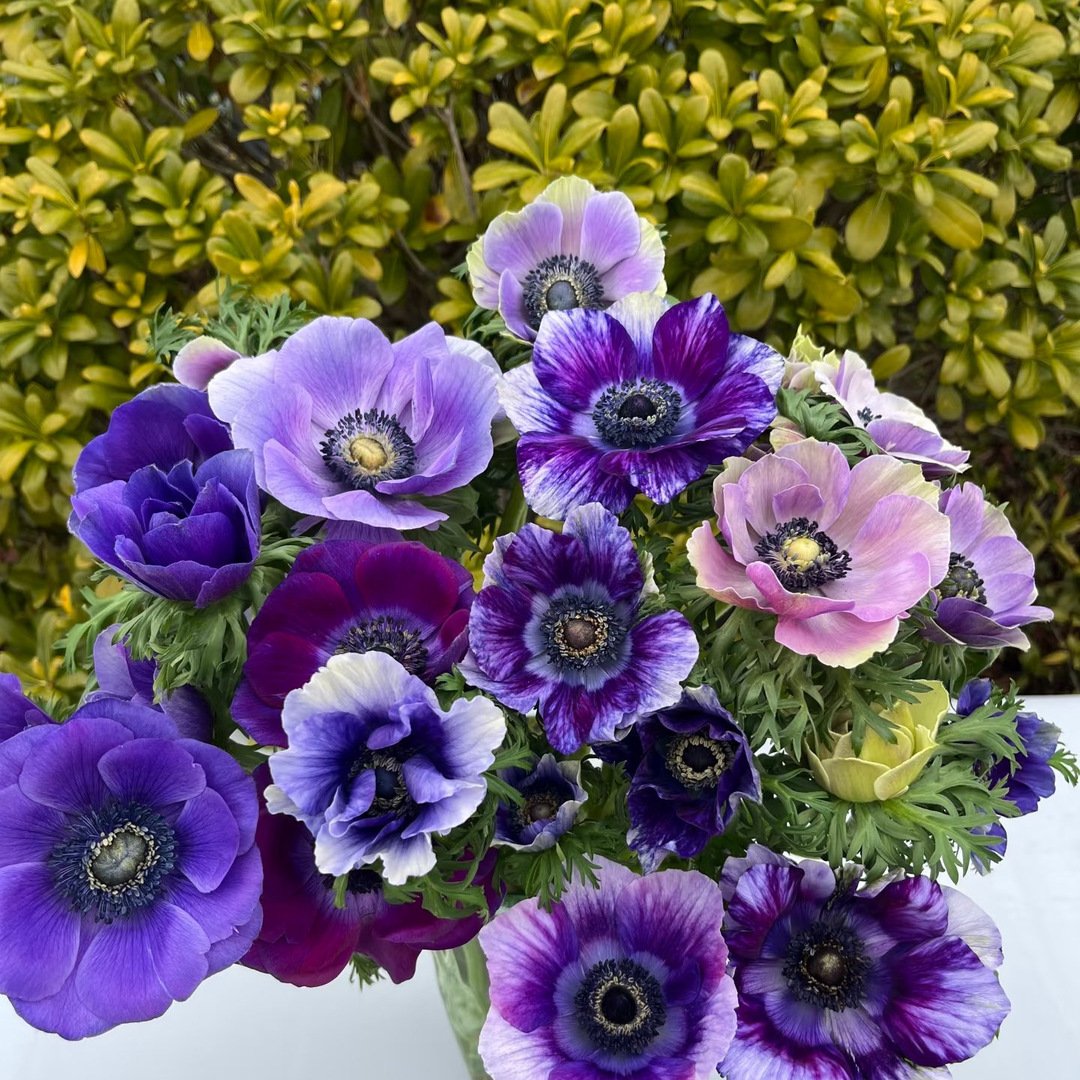
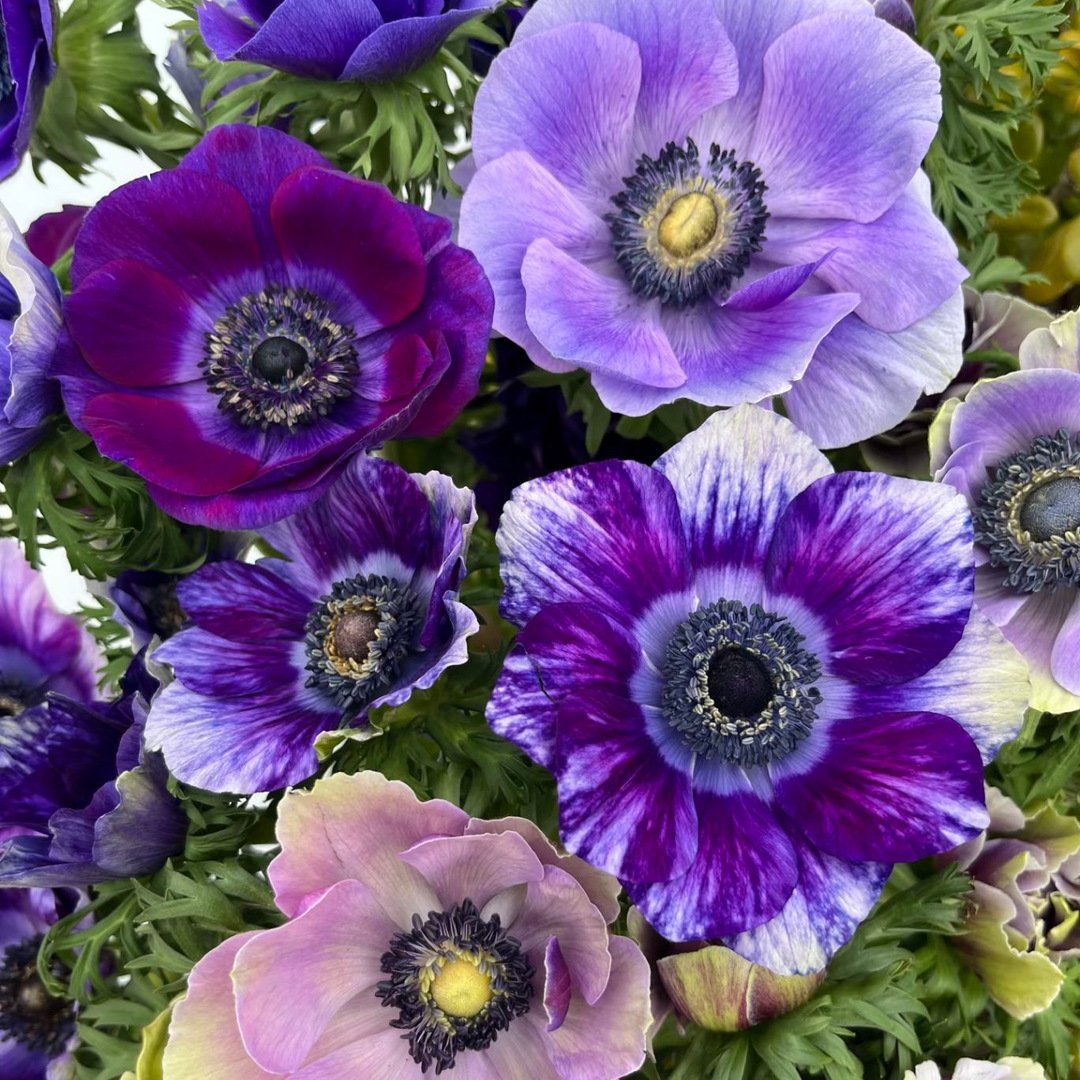
Each corm produces several upright, slightly hairy stems topped by a single poppy-like flower built from a ring of broad tepals around a conspicuous dark central disc of stamens. Buds open in sequence rather than all at once, so one planting stays in flower for several weeks in cool spring weather, and individual blooms last around a week on the plant. As each flower fades, remove it at the base of the stem to keep the clump tidy and to stop energy going into seed. The finely cut, fern-like foliage keeps photosynthesising long after the last petal drops, and that leaf period is what rebuilds the corm for the following year.

4. Dormancy, lifting and storage

When the leaves yellow and collapse in early summer, the plant has entered dormancy: stop watering completely and leave the soil dry for a couple of weeks. In zones 7 and above the corms can usually stay in the ground if drainage is sharp, but anywhere with wet or freezing winter soil it is safer to lift them with a fork, brush off the soil and let them cure in a shaded, airy place for a week. Store fully dry corms in paper bags, dry vermiculite or peat-free compost at roughly 10-15°C, checking occasionally for soft or mouldy pieces. Replant the following season and expect the strongest display in years two and three.

5. Cutting, garden use and safe handling

For the longest vase life, cut stems in the cool of the morning when the flowers are only just open and the central disc is still firm, slice the stem at an angle and stand them in shallow, cool water changed every two days. These corms suit spring borders, mixed containers, window boxes and dedicated cutting rows, and they combine well with other spring bulbs that enjoy the same free-draining conditions. Anemone corms and sap contain protoanemonin, which is irritating to skin and toxic if eaten by cats, dogs or people, so wear gloves when handling dry corms, label stored bags clearly and keep them well out of reach of children and pets.

Additional information
Number of Products10Bulbs, 15Bulbs, 4Bulbs, 6Bulbs, 8Bulbs

Reviews

Customer Reviews

0.00 out of 5
Based on 0 reviews
0
0
0
0
0
There are no reviews yet.
Purchased customers only

Only customers who purchased this product can leave a review. Please log in with the purchase account, or ask a product question below.

Ask a question

Questions & Answers

No questions yet.

Hot Deals

Recently Viewed

Subtitle text example

Title text example

标题后的文本示例